Yezi Qiu
Yezi Qiu is a Calgary-based artist currently studying at the Alberta University of the Arts. She holds her identity as an artist lightly and honestly, still asking herself whether she is ready to claim that title, or whether what she makes can truly be called art. For now, she thinks of herself as a student — one who is still exploring, still learning, and still finding her own way of making.
For Qiu, the impulse toward art has never felt like a decision. She has been drawn to beautiful things, and especially to colour, for as long as she can remember — an affinity that feels like it was born with her, from the beginning.
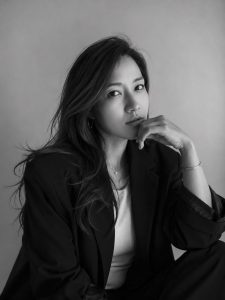
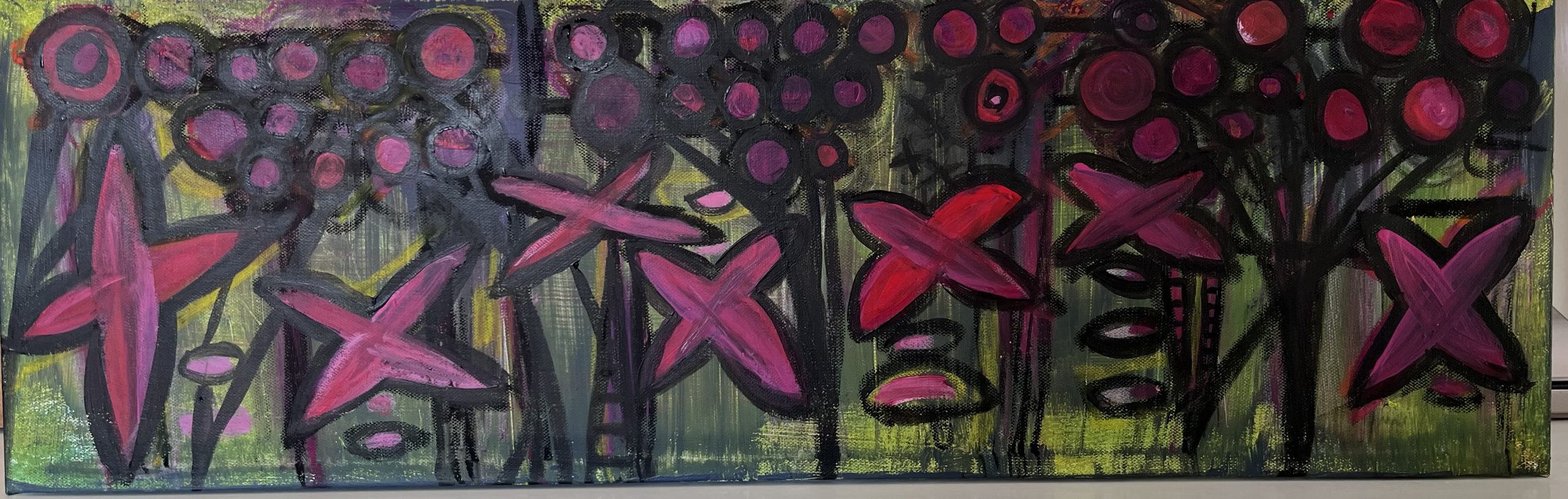
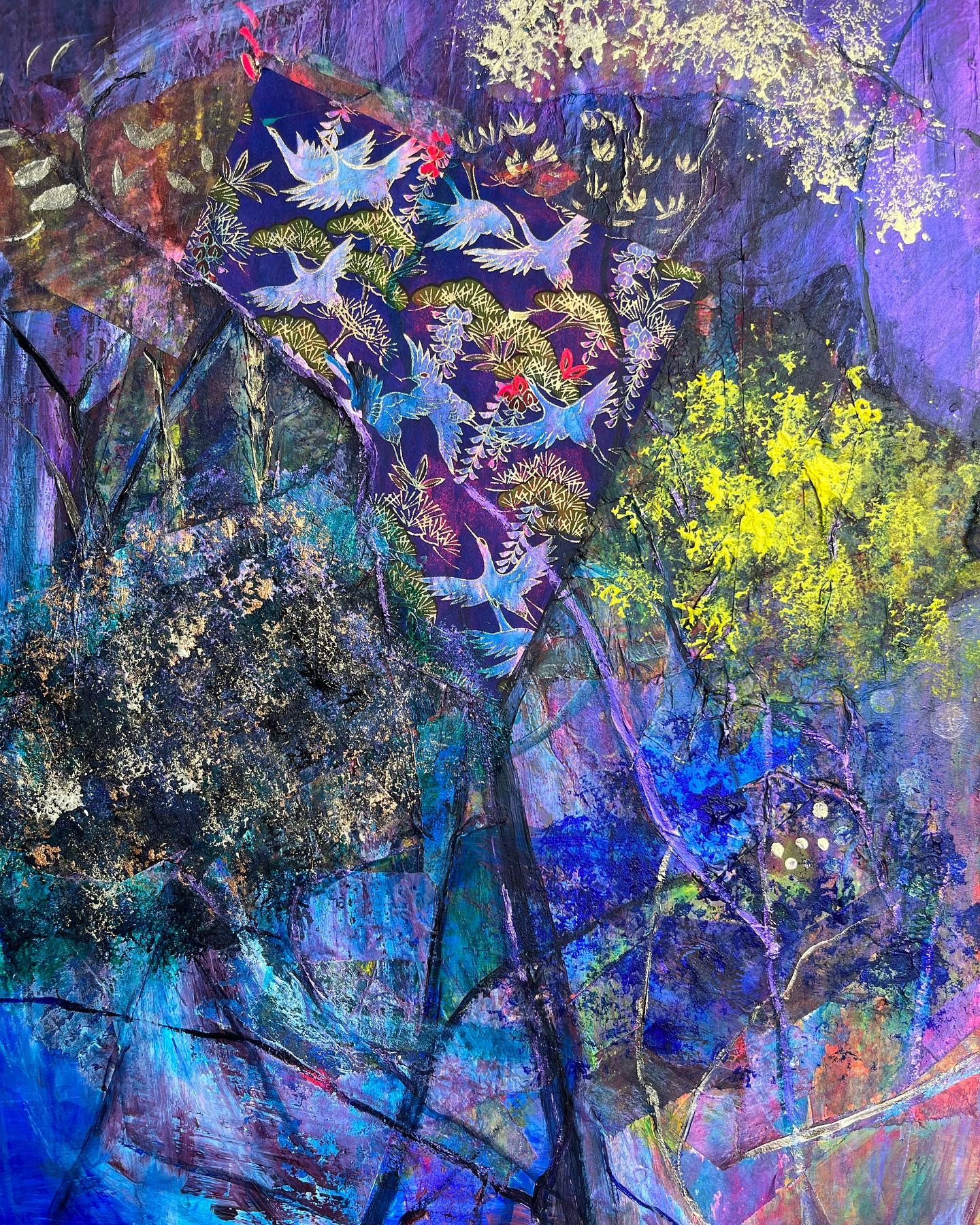
She works primarily in textiles, drawn to the softness and warmth of fabric and to the layered possibilities that open up when colour, texture, and material are brought into conversation with one another. Her pieces are often noted for their subtlety and depth, carrying a quiet allegorical undercurrent beneath their gentleness. Her work draws from what sits closest to her own life: memory, family, womanhood, growth, relationships, loss, healing, time, and the small textures of everyday experience.
Some of this material begins in difficult or emotional ground, but Qiu is careful not to let her work settle there. She is more interested in what comes after hurt — how we remember, how we repair, how we keep growing, and how something soft or beautiful can still emerge from an imperfect experience.
If a viewer takes away one feeling from her work, Qiu hopes it is warmth. She wants her pieces to feel gentle, comforting, and, perhaps, a little healing.
What is your earliest memory of losing yourself in something artistic?
One of my earliest memories of completely losing myself in something creative was when I was about eight or nine years old. I loved making clothes for my Barbie dolls.
I remember sitting on the floor with pieces of fabric around me, trying to turn them into little clothes. I could spend an entire afternoon doing this without being distracted by anyone or anything. I was completely focused on what I was making and didn’t notice the time passing.
Looking back now, I find it interesting that I was already drawn to fabric at that age, long before I knew anything about fibre art.
What mediums do you use, and do you have a favourite?
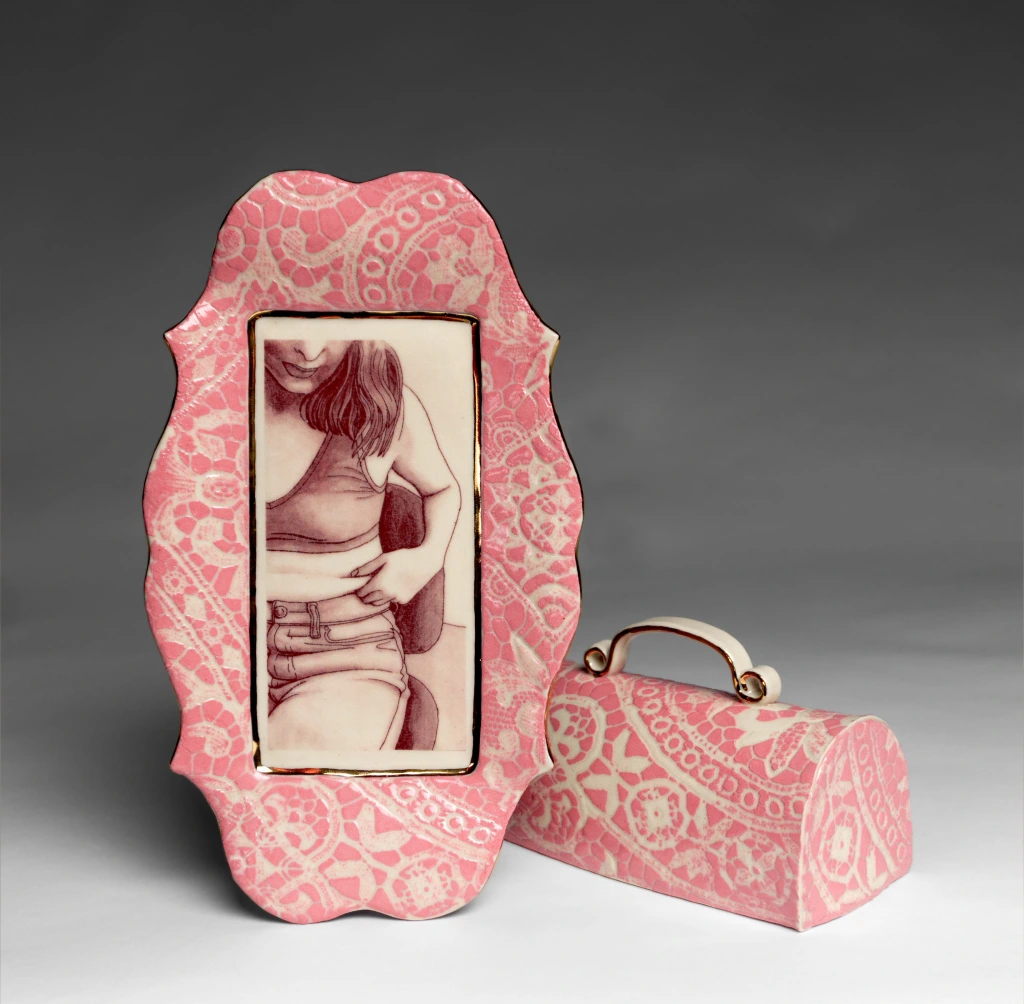
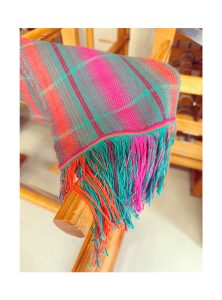
I enjoy working with different mediums, including textiles, embroidery, watercolour, and ceramics. Fibre is probably the medium I feel most connected to. I love working with fabric, thread, texture, and especially colour.
Tell me about your studio, and how much time you spend in it.
I am lucky to have a small studio of my own at home. I have two worktables—one for painting and another for my sewing machine and textile work. It is not perfectly tidy, but everything has its own place, and I like the feeling of being surrounded by my materials and the things I am working on.
I actually don’t spend as much time in my studio as I would like. Between school and everyday life, it can be difficult to find long, uninterrupted periods of time to work there. But I really love having this space in my home. Even when I am not making something, just walking into the room makes me feel comfortable and reminds me that there is a place waiting for me to create.
What are some items in your studio that you can’t live without?
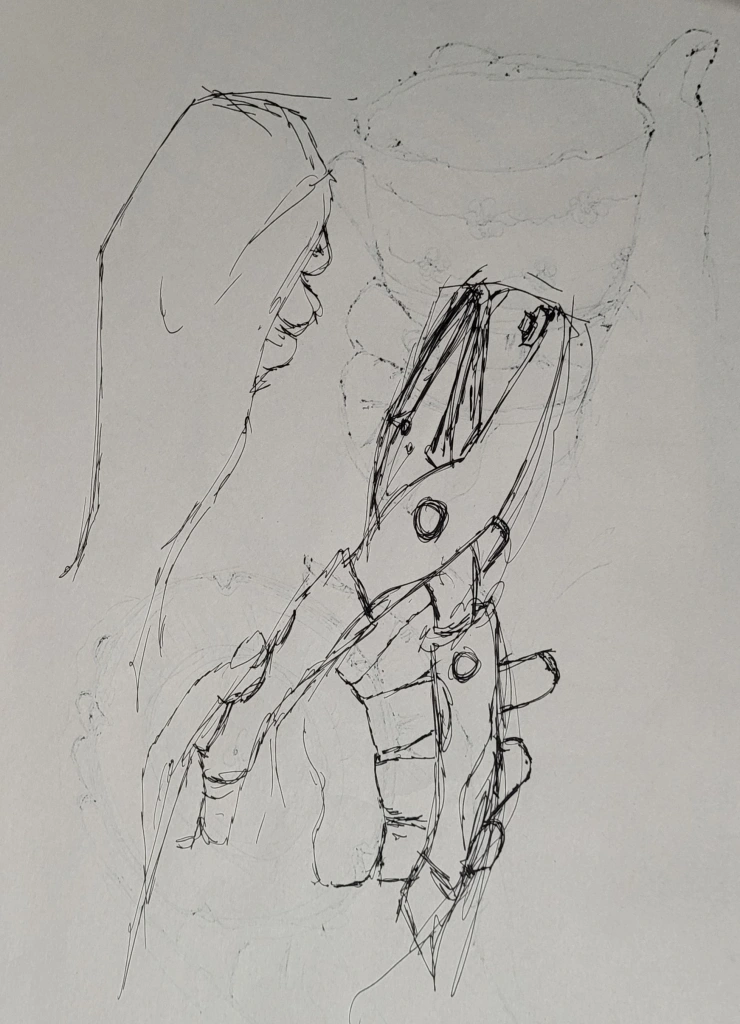
Probably pens and threads in all kinds of colours. I find it interesting that both drawing and textiles begin with something very simple: a line. A drawing is built from lines, and fabric is made from threads. In a way, the things I have the most of in my studio are also the most basic elements of the two kinds of making I love.
We’ve often heard the idea that you have to be a “suffering artist” to make great art. Do you think this is true? Can we make art from a place of great joy and ease?
There is a famous line at the beginning of Anna Karenina: “All happy families are alike; each unhappy family is unhappy in its own way.”
I don’t think an artist has to suffer in order to make good art. But I do think our experiences give us something to think about, and those thoughts can become a source of creativity. It is difficult to reflect deeply on something you have never experienced or felt.
Those experiences do not always have to be painful. They can come from love, happiness, loss, relationships, family, or simply everyday life. What matters to me is that we experience something, feel something, and then think about what it means to us.
So I don’t believe suffering is necessary for art, but I do believe that living, experiencing, and reflecting give us something meaningful to create from.
What are the things that challenge you, as an artist?
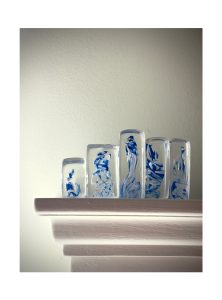
Sometimes I know exactly what I want to express in my mind, but it can be difficult to find the right words in English. It is not only about translating from one language to another. Different cultures can understand the same idea, image, or experience in very different ways. At the same time, I think this challenge is also becoming part of my work. Living between different languages and cultures makes me think more carefully about how I communicate an idea.
Who are the artists that YOU follow? What do you like about their work?
I love William Morris, Kaffe Fassett, and Liv Lee, although I am drawn to each of them for different reasons.
I love William Morris for his patterns and the way he brings plants and nature into everyday life. His work makes me feel that art does not have to be separated from the things we live with every day.
I am drawn to Kaffe Fassett because of his fearless use of colour. His work is so rich, bright, and full of energy. I love the way he combines colours and patterns, especially through textiles.
I also really enjoy Liv Lee’s work. I love her playful and expressive way of painting flowers and plants. Her shapes are not always realistic, but they still feel full of life. I especially like her use of colour and the sense of joy in her work.
I think what connects these artists for me is colour, pattern, nature, and the idea that art can be part of everyday life.
Do you have any stretch goals for your art? Or, what would you like to do next?
Right now, my main goal is to finish my degree and continue building my body of work. I also hope to slowly develop my own brand and have opportunities to connect with professional textile design companies. I would love to learn more about the industry and explore where my work might fit within it.
What is the best advice you have ever received as an artist?
I think the best advice is simply to keep making. I am still learning and sometimes I question my work or m
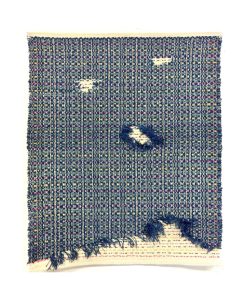
yself as an artist. But I think the only way to find my own voice is to keep making, experimenting, and learning along the way.
Things you dislike… about art, about creativity.
I am naturally drawn to art that feels beautiful, warm, or uplifting, so I personally find it difficult to connect with work that is extremely violent, bloody, or sexually explicit, especially when it involves children. I understand that artists use these subjects for different reasons, but they are not the direction I want to explore in my own work.
Where can we find your work (for example, do you have a website, Instagram, storefront etc)?
You can find my work at yeziq.com in the future, where I am currently building my portfolio,
and on Instagram at @yezi.qiuuu